 The Holocene Project
Animal library · first model in production
Every animal, rebuilt from the evidence.
Each species starts from a real 3D scan or published measurements, a skeleton measured to the animal and photographs to check against. The first one through is the red fox.
The drawer
Species in the pipeline.
One animal at a time, each from its own real scan. Recolouring one species into another does not work, so every species waits for a scan of its own.
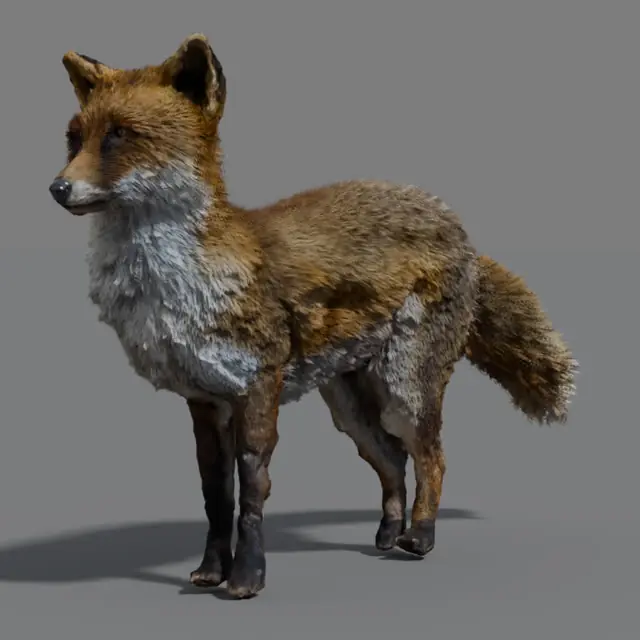
Red fox
In productionFrom a CC BY scan: rigged, furred, with 105 movement clips generated on its measured skeleton. The paws and some leg poses are being fixed before it can sell.
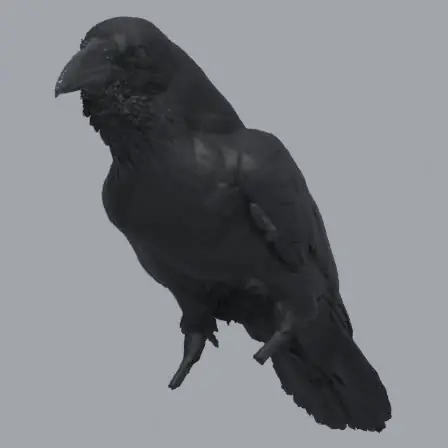
Common raven
Feathers passedFrom a CC0 museum scan. The first bird: its feather layer beat the bare scan, and a species-recognition model places it with the ravens in all six test views, in Blender and in Unreal. Eye size is measured from real photographs.
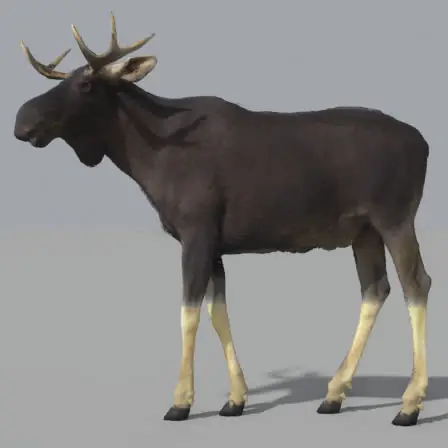
Moose (Eurasian elk)
In testingFrom a CC BY scan of a bull, matching in Blender and in Unreal. Walk and trot are in testing; its gait numbers are still estimates until measured moose data is found.
Grey wolf
HeldBuilt from measurements and photographs over 18 versions, before the scan route proved faster. Held until the fox is done.
The source card
Every number says where it came from
Each animal carries a record of its measurements, the photographs it was fitted to and the licence of each one. When nobody has measured something, the card says so instead of guessing quietly.
This is the card for the grey wolf, which we built from measurements before the scan route proved faster. Its figures come from the wolf account in Heptner and Naumov.
- Body mass, adult male
- 40–45 kg
- Head and body
- 118–137 cm
- Tail
- 42–52 cm
- Hind foot
- 25–26 cm
- Ear
- 12.7 cm
- Skull, greatest length
- 257–267 mm
- Model skull length
- 262 mm
- Reference photographs
- 22, licence each
Heptner V.G. & Naumov N.P. (eds) 1998, Mammals of the Soviet Union, vol. II part 1a, wolf account. No Ice Age Scandinavian wolf has been measured, so these are living Eurasian wolves, marked on the card as an analogue. The model's skull sits between the tundra and Taimyr male means. Spine proportions were measured off mounted skeletons.
How a model is made
One pipeline, run again for every species
The steps are code, so each species goes through the same checks, and a fix to the pipeline improves every animal built on it.
Scan
A 3D scan of the real animal, a mount or a skeleton, with its licence recorded. Where no scan exists, published measurements set the shape.
Skeleton
Bones measured inside the scan, with the same bone names across every species of a body plan.
Skin and rig
Weights solved from poses, so the body bends at the joints without folding or poking through.
Coat
Fur grown from the scan's own surface colour, kept only if it scores better than the bare scan.
Gaits
Walk, trot, lope and gallop generated on that skeleton at the species' real speeds and strides, plus behaviours such as sitting, growling and yawning.
Checks
Every clip is checked for feet sliding, body poking through the coat, and how strongly a species-recognition model names the render.
Export
The Blender source file, levels of detail and an Unreal-ready export.
Coverage
Rough drafts for about 47,700 species.
A generator turns open trait data into a rough draft of every species: right size, right proportions, right body plan. Drafts are the starting point the pipeline refines. They are not the finished product.
| Group | Species drafted | Built from |
|---|---|---|
| Land mammals | 4,431 | PHYLACINE, COMBINE |
| Bats | 1,162 | PHYLACINE, COMBINE |
| Sea mammals | 128 | PHYLACINE, COMBINE |
| Kangaroos and kin | 106 | PHYLACINE, COMBINE |
| Birds | 11,525 | AVONET, AVOTREX; plumage colour from the HBW plate set (CC0) |
| Fish | 11,502 | FISHMORPH, Rabosky et al. |
| Reptiles | 12,060 | ReptTraits |
| Amphibians | 6,756 | AmphiBIO |
| Insects, spiders, crabs, shellfish | 80 | A chosen list: eaten, used, traded, harmful or seen every day |
Who it is for
Anyone who needs the animal to be right
Game studios
Hunting, survival and open-world games where players know what a reindeer looks like at a run.
Film and VFX
Background wildlife that holds up in a documentary or a period drama.
Museums and education
Animals of past ages, including extinct ones, built to the measurements.
Research and AI training
Synthetic pictures of named species for training wildlife detectors on camera traps and drones.
Planned
What each model will include
Blender source
The full working file, editable and engine-free.
Standard skeleton
The same bone names across a body plan, so animations and tools carry over between species.
Gaits
Real-speed movement cycles for the species.
Levels of detail
From close-up hero to far herd.
Source card
Every measurement and photograph, cited.
A clear licence
Built only from open sources and our own work, so the rights are clean.
Not on sale yet, and pricing is not set. The build progress tab shows where the first models are.