 The Holocene Project
Anywhen · a game from The Holocene Project
The living world, rebuilt from the evidence.
We are building every animal and plant, and the land they lived on, from real scans, photographs and measurements, from the end of the Ice Age to today. Then we hand you a life in it.
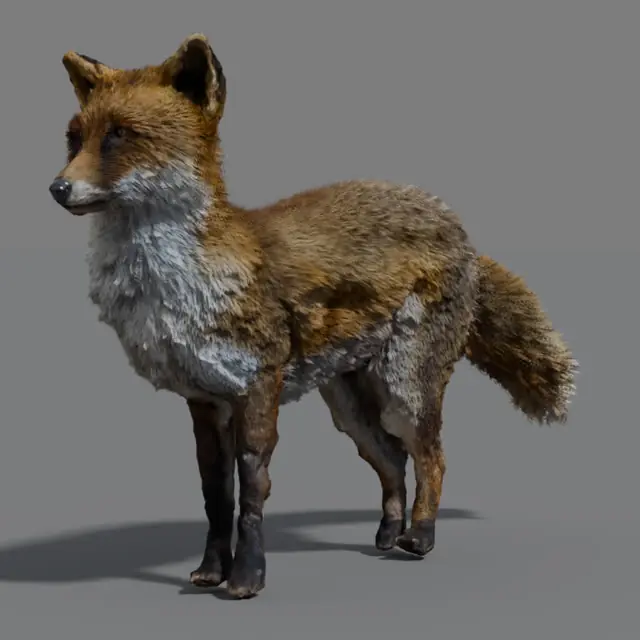
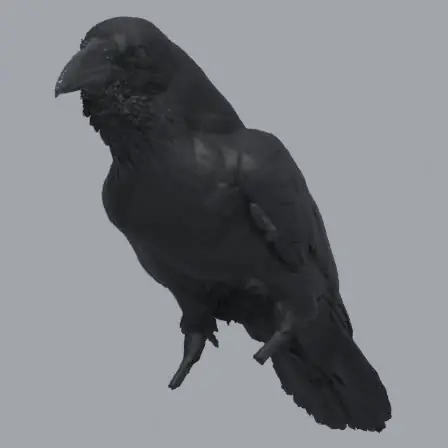
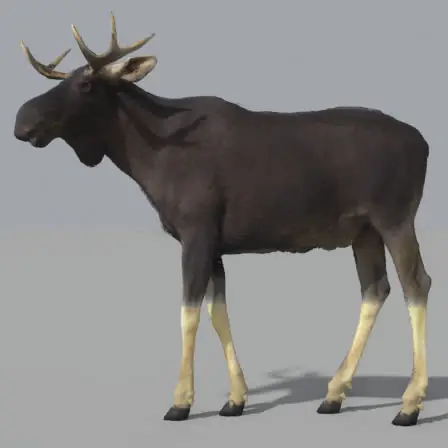
- Starts
- 11,700 years ago
- World
- The whole Earth
- Scale
- One camp to a realm
- Lives
- Any, in any age
- First animals
- Fox, raven, moose
The aim
A copy of the living world, accurate enough to step into, and open to anyone who wants to check how it was made.
Every animal
Mammals, birds, fish, reptiles and amphibians. A rough draft of about 47,700 species already exists, from open trait data, including ones that are gone.
Every plant
Every vascular plant on Kew's World Checklist is already in our tables, with traits from open plant databases.
Every age since the ice
The world starts as the ice leaves Norway and runs to today, on the real terrain of the whole planet. Climate, coasts and forests change with the ages.
Lived from the inside
A reindeer hunter, a smith, a farmer, a secretary, or a fox on the shore. Ordinary lives, in any age, each a full life to play.
Why it matters
Any life, in any age, in the real world.
Anywhen means stepping into a life that is not your own: another person, another age, another animal's eyes. That only works if the world you step into is the real one.
- I
To see the past from inside it
Most of the human story happened long before photographs, among animals and plants most of us have never seen. We want people to stand in that world, with the species and weather that were really there, and see how ours grew out of it.
- II
For the animals that are gone, or going
The drafts already include animals no one alive has seen: Mammuthus primigenius, Pinguinus impennis, Thylacinus cynocephalus. Built from bones, skins and records, they could be met again, and the living ones can be known before they go the same way.
- III
Because pictures teach
Most people learn what a wolf looks like, or how a fox moves, from a screen. A model built by eye can only be judged by eye. One built from measurements can be checked, cited and used in a classroom, a museum or a film without teaching the wrong animal.
- IV
Sources that stay public
Every number, picture and scan in every model is named with its source and licence on the sources page. The work of the people who measured, photographed and catalogued these animals is credited every time it is used.
And it has to pay its way. Selling the finished animals as a library, and the world as a base for mods, is what lets the work continue and grow. The three things we make are at the bottom of this page.
The bigger idea
A whole living world that runs whether you are there or not.
Not a level or a map, but the planet, simulated: the land, its weather, everything that lives on it, and every people in every age. Where you start is just where you step in.
Real ground, everywhere
Real elevation, climate, rivers, coasts and land cover for the whole Earth, down to the ground under your feet.
Nothing comes from nowhere
Climate shapes plants, plants feed animals, animals and soil shape how people live. Game that is hunted out does not just reappear.
A camp, a town, a realm
Start as one person. Gather, build, take in followers, found a settlement, and grow it through towns and cities to a realm with governors, diplomacy and armies.
The world goes on without you
About 3,000 bands with their own cultures move, settle, trade, believe and fight across the map, with named people and families.
Found the way it really was
Skills are learned by doing and ideas spread from person to person, through twelve eras of technology from stone tools to today.
Yours to choose
A reindeer hunter, a smith, a farmer or a secretary, each a full life with its own days. Or play as an animal. And with mods, build a world with rules of your own.
The simulation runs in our own browser build today; its look is moving to Unreal Engine 5. Where it stands, step by step, is on the build progress page.
A few of the species drafted so far. † extinct.
Why we need help
Open data runs out exactly where realism starts.
Trait tables give us the size and shape of every species. Looking real takes a captured surface: a scan of the actual animal. Scroll through what exists.
About 47,700 animal species have a rough draft in our tables. Each dot is one of them.
About 155 open scans. That is how many whole-body, textured scans of vertebrates we found that we are allowed to build a sold model from. Give each one a dot and that is how far they reach: about one species in 300.
About 15 of those are standing mammals like our fox. Most of the rest are birds.
No wolf. We searched every open collection we could reach. Without a scan we built 18 versions of a grey wolf from photographs and published measurements, and none looked right. The wolf is on hold.
Buying doesn't fix it. None of the paid stock licences we checked lets anyone resell a changed model. The missing scans, footage and measurements sit with the people who care for and study these animals.
Counted on Sketchfab in November 2026 by looking at every candidate, the biggest open pool we searched. MorphoSource had no open, sellable vertebrate meshes. Lists and method are in the build records.
What one scan does
One scan beat everything we had built by rule.
The same red fox, scored by a species-recognition model (BioCLIP 2) choosing among 18 look-alike species. Left: the fox we built from rules and trait data in October. Right: one raw scan of a mounted fox, before any of our work on it.
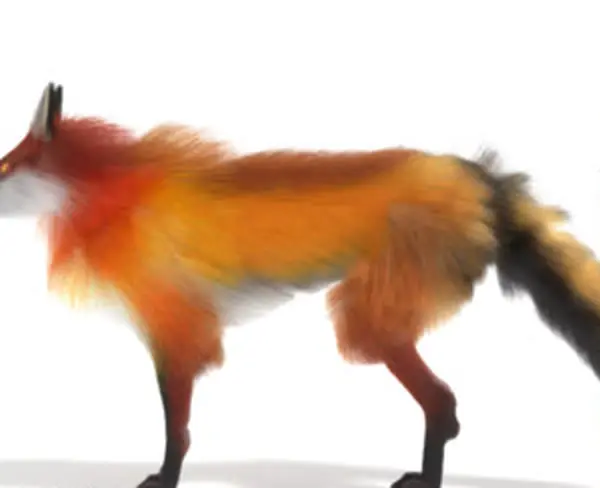
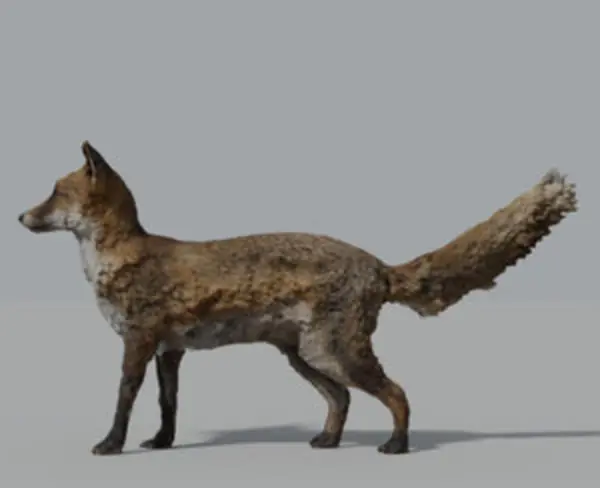
Chance the model names it a red fox, mean of all views. The two models were lit in different studios, so read the direction more than the exact gap. Real photographs (156 of them, in their own scenes) are shown for reference: they are the bar. The scan still fails at the face, where taxidermy sculpts the muzzle, and that is where partner data matters most.
What we are looking for
The data open sources don't have.
Every animal we build is checked against the real one. These are the places where our checks fail for lack of data, and where a partner's collection, footage or notes would make the biggest difference.
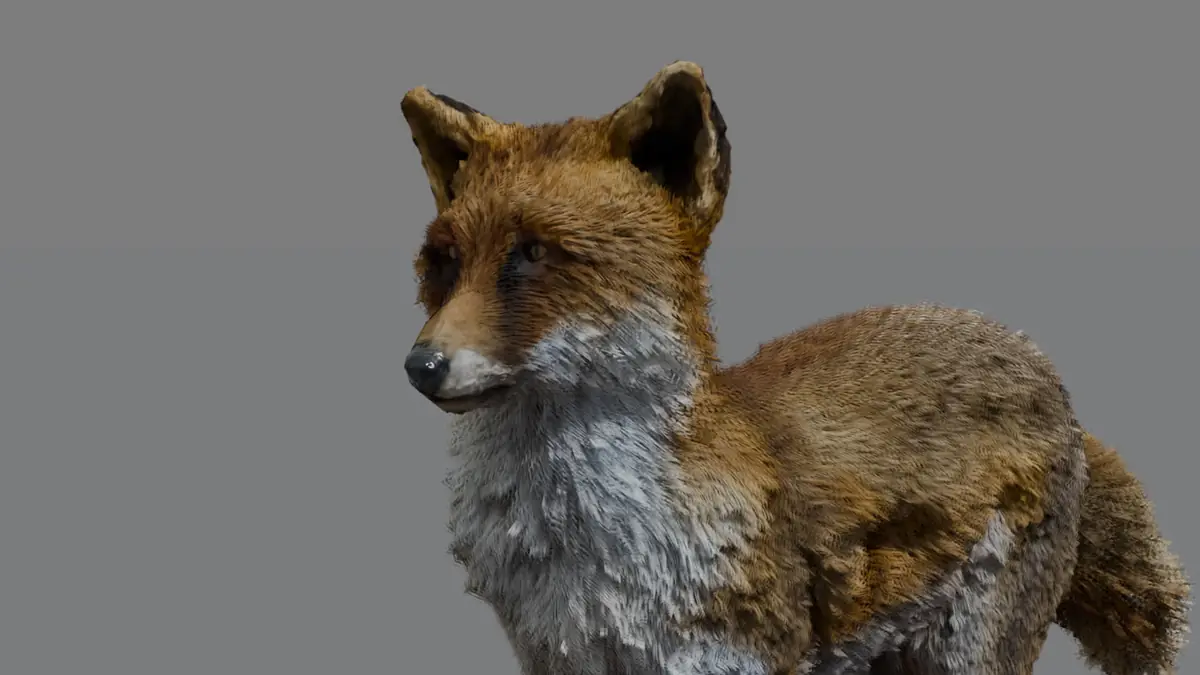
Mounts, skulls and skeletons
One phone photo-scan of a mounted fox gave us its shape and colour in a single step. Scans of other species would do the same for them.
Animals moving
Side-on walks, trots and gallops on known ground. We measure stride, speed and leg angles from the frames and build the gaits from those numbers.
Feet, faces and mouths
Photographs or casts of paws, pads, teeth and lips. No open dataset covers these well.
Measurements and notes
Body masses, limb lengths, coat samples and observations from keepers, vets and field researchers.
What one scan became
From a free test scan to a fox that trots.
The red fox started as one scan of a mounted fox, shared under CC BY 4.0. Everything after that is our pipeline, and the same pipeline runs for the next species.
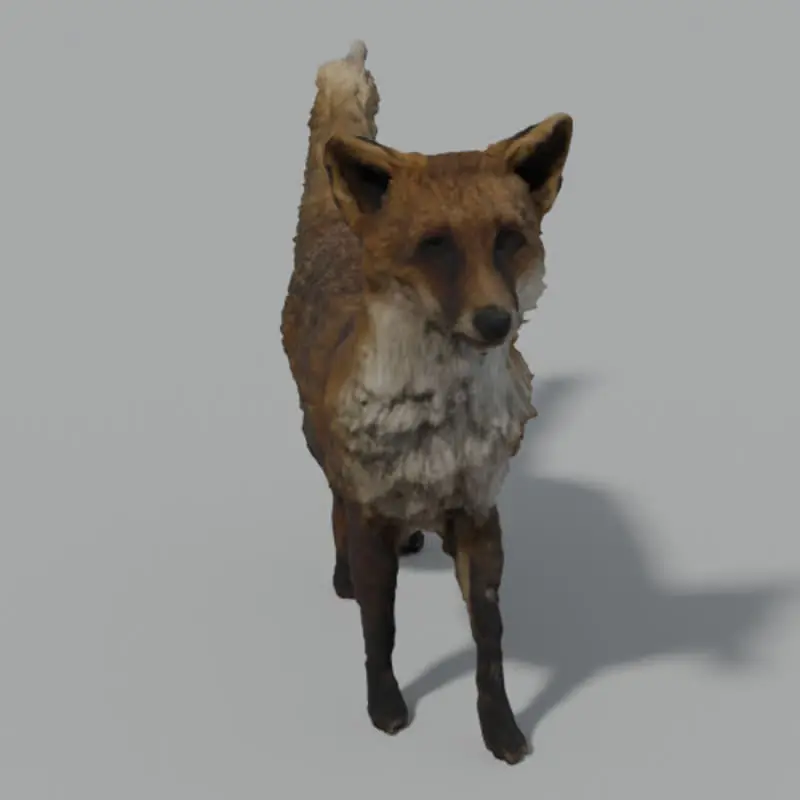
The scan
The mount's shape and its real surface colour, as photographed. Stiff, with no skeleton inside.
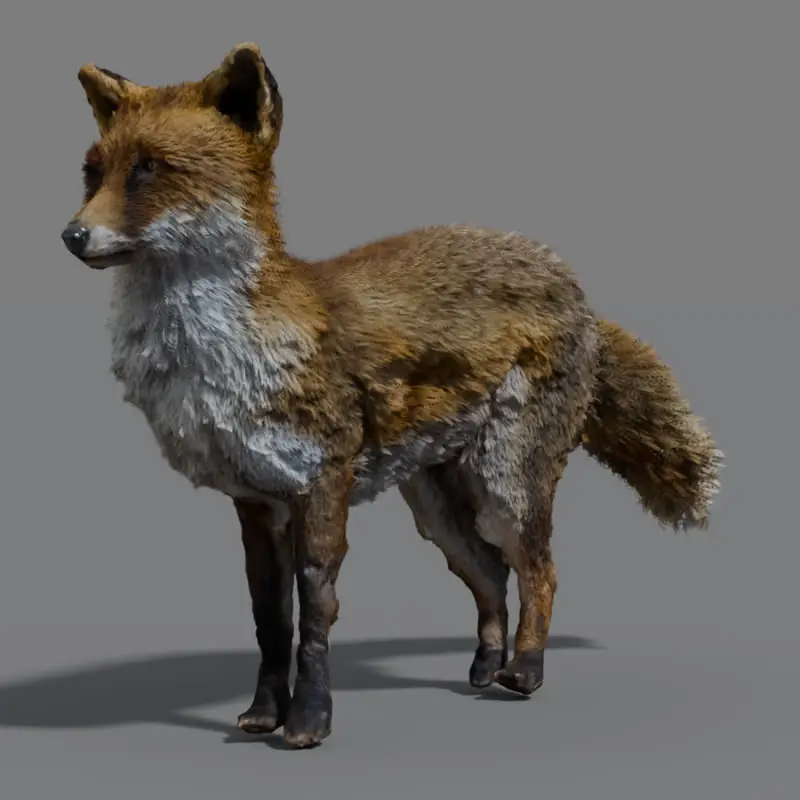
Skeleton and coat
Bones measured inside the scan, a rig, and fur grown from the scan's own surface. In a studio test the coat lifted the species score from 0.51 to 0.78.
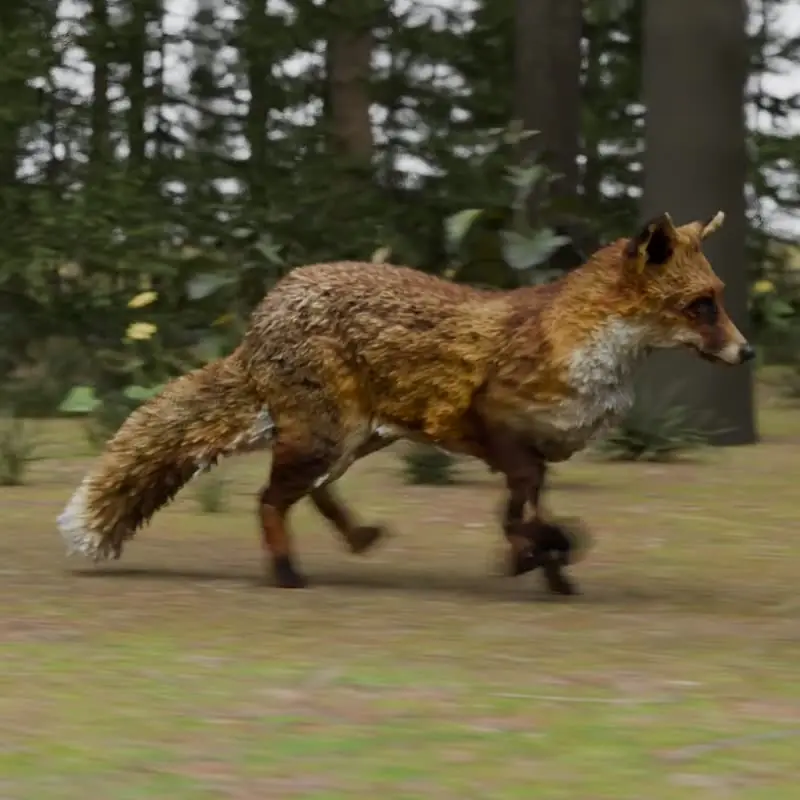
Motion
105 clips, from walk and gallop to sitting, growling and yawning, generated on the fox's own skeleton at real speeds and strides.
Still open before it can sell: the paws, and legs that push through the coat in some poses. Both are on the build progress page.
Specimen 001 · Red fox
Turn it over in your hands.
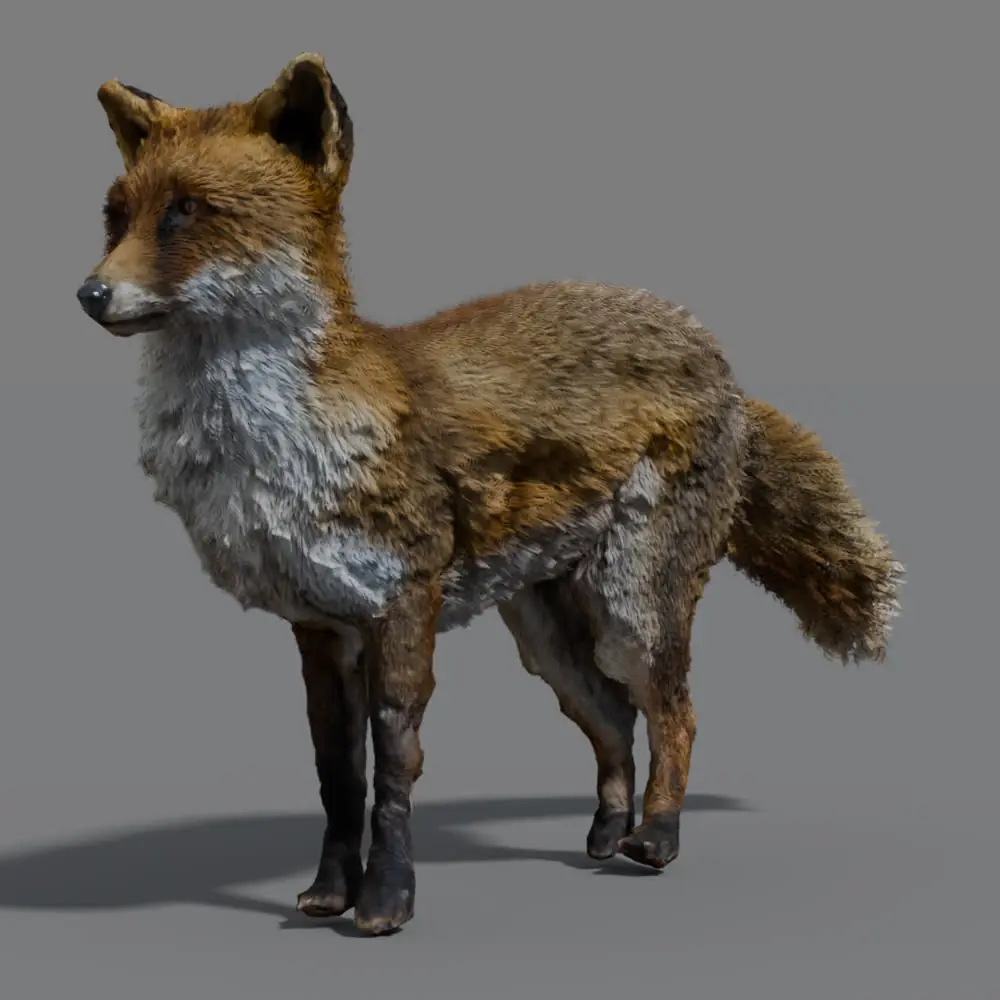
Drag across the fox to turn it, or focus it and use the arrow keys. It is a studio render of the model as it stands today, including the parts still being fixed.
- Body
- CC BY 4.0 scan, rigged
- Coat
- Fur shells grown from the scan
- Clips
- 105
- Engines
- Blender source, Unreal 5
Working together
Help us get your animal right.
We record the source of every number and every picture in every model, and partner data would be credited the same way, wherever the model goes. Better data makes a truer model of the animal you care for or study.
The terms are not set yet. We will agree them with each partner, covering credit, access to the finished models, any discount, and the licence we need to sell models built from the data.
We never pass your contact details to anyone else.
How it pays its way
One world, three things built on it.
Animal Library
Rigged animals with their sources attached: Blender source files, one skeleton standard per body plan, ready for Unreal. The red fox comes first, then the raven and the moose.
Visit the library →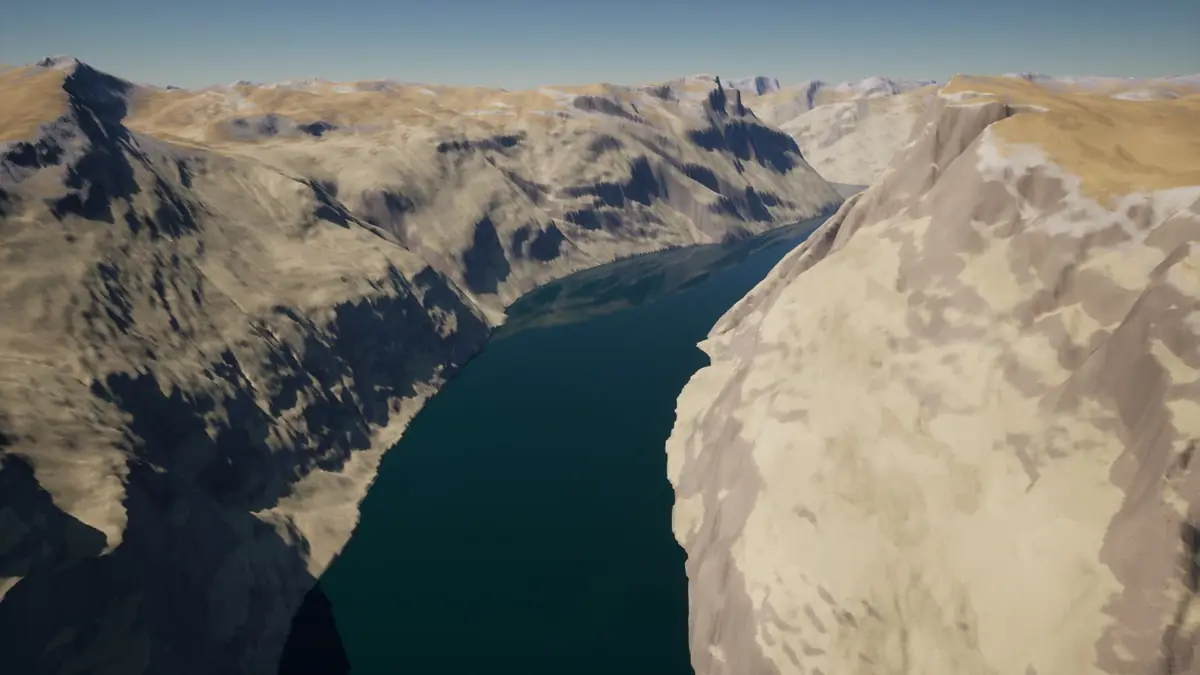
Anywhen, the game
A simulation of the whole planet that starts 11,700 years ago as the ice leaves Norway. Grow a camp into a town, a city or a realm, live an ordinary life in any age, or play as an animal.
Follow the build →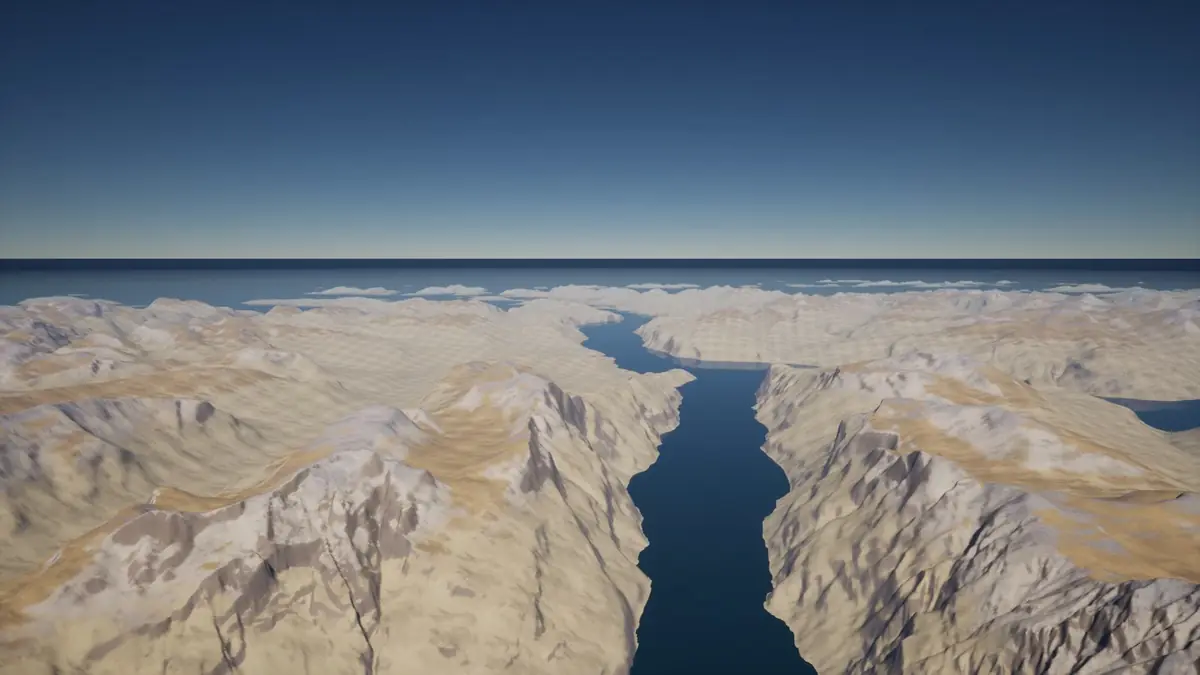
Mod Market
Everything in the base game is data a mod can change. Build a world with its own rules on top of ours, and later sell it.
Visit the mod market →In numbers
If it is in the world, it has a source.
How we work, source by source, is on the home page and the sources page.